
10 exercises for strong feet (free PDF)
This article is informational. For specific complaints, consult a podiatrist, foot physiotherapist, or physician.
Your feet contain more than a hundred muscles, but most adults use only a fraction of them during a typical day in rigid, cushioned shoes. The good news is that foot strength responds quickly to training: studies indexed on PubMed show measurable gains in intrinsic muscle size and activation after 6 to 8 weeks of short daily practice. Below is a simple routine you can do at home.
Why foot strength matters
Strong feet support the arches, absorb impact more efficiently, and give you better balance. A 2015 paper in the British Journal of Sports Medicine found that runners who performed an eight-week intrinsic foot strengthening program reduced injury incidence by roughly two thirds. The American Podiatric Medical Association recommends regular foot exercises as part of general foot care, especially for adults who sit most of the day.
The 10 exercises
1. Short foot
Sit barefoot. Without curling your toes, draw the ball of the foot toward the heel so the arch lifts slightly. Hold 5 seconds. 10 reps per foot.
2. Toe spreads
Sit or stand. Spread all toes as wide as possible, then relax. 15 reps per foot. Difficulty: start without weight, progress to standing.
3. Big toe lifts
Keep the small toes on the ground and lift only the big toe. Then reverse: lift the small toes while pressing the big toe down. 10 each direction.
4. Towel scrunch
Place a small towel on a smooth floor. Using only your toes, pull the towel toward you. 1 to 2 minutes per foot.
5. Calf raises (double-leg)
Stand near a wall for balance. Rise onto the balls of the feet, hold 2 seconds, lower slowly (3 second count). 15 reps, 2 to 3 sets.
6. Single-leg calf raises
Once double-leg becomes easy, progress to one foot at a time. 10 reps per side.
7. Toe walks and heel walks
Walk on your toes for 20 meters, then on your heels for 20 meters. Repeat 2 to 3 times.
8. Marble pickups
Using your toes, pick up 10 to 20 marbles or small objects from the floor and place them in a bowl. Trains fine motor control.
9. Balance on one foot
Stand on one foot, 30 to 60 seconds per side. Progress by closing your eyes or standing on a cushion. Great for ankle stability.
10. Plantar fascia stretch
Sitting, cross one leg over the other. Gently pull the toes back toward the shin until you feel a stretch along the sole. Hold 20 to 30 seconds, 3 reps per foot.
How often
Aim for 5 to 10 minutes, 5 days per week. Most research designs use short daily sessions rather than long weekly ones because neuromuscular adaptation needs frequency, not volume. Expect visible and felt improvements within 4 to 6 weeks.
Combine with barefoot shoes
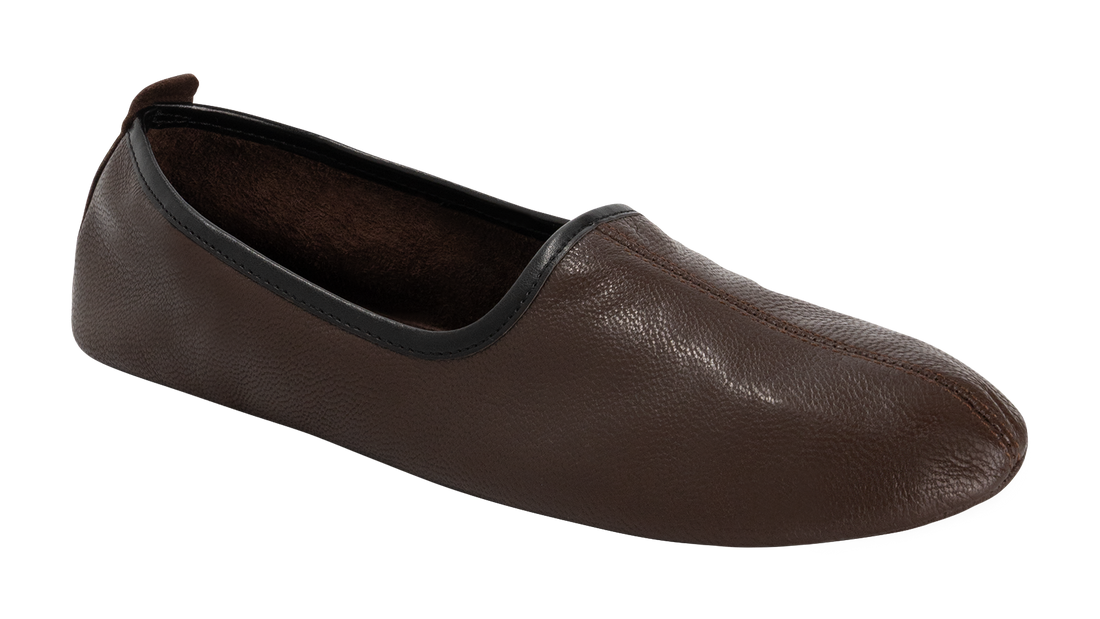
Exercises work best when daily footwear reinforces the same patterns. A wide toe box and a flexible sole let your feet keep practicing the movements you train. Our Sereen indoor leather shoes suit home and low-load wear; the Terra outdoor leather shoes work for daily walking. For fit, see our size guide. For kids, the Earth Collection is built with the same principles scaled down.
Measuring progress
- Static: take a photo of your bare feet from above every 2 weeks. Toe spread often widens noticeably.
- Strength: count how many single-leg calf raises you can do with good form. Target 25 per side.
- Balance: time single-leg stance with eyes closed. Target 30 seconds per side.
- Comfort: note how long you can comfortably wear minimalist shoes each week.
For the full context on feet, see our pillar guide. If you have flat feet, read the flat feet piece before ramping up loading.
This article is informational. For specific complaints, consult a podiatrist, foot physiotherapist, or physician.