
Foot Health and Natural Movement: Everything You Need to Know
This article is informational. For specific complaints, consult a podiatrist, foot physiotherapist, or physician.
Your feet carry you roughly 7,500 steps a day, absorb two to three times your body weight with every stride, and contain one quarter of the bones in your entire skeleton. Yet most people give them less thought than their smartphone. This guide pulls together what peer-reviewed research, podiatric medicine, and centuries of walking cultures tell us about healthy feet, and what you can do to keep yours strong.
Foot anatomy 101
Each foot contains 26 bones, 33 joints, and more than 100 muscles, tendons, and ligaments. Three arches (the medial, lateral, and transverse) work together as a dynamic suspension system. The intrinsic foot muscles (those that start and end within the foot) act like a living orthotic, adjusting shape with every step. Research published by the American Podiatric Medical Association emphasises that these small muscles play a larger role in balance and propulsion than was long assumed.
What disrupts natural walking
Natural gait relies on a heel-to-toe roll with toes spreading on contact and push-off. Several modern factors interfere with this pattern:
- Narrow toe boxes that compress the forefoot
- Elevated heels that shift body weight forward
- Stiff soles that block the foot's natural flex
- Heavy cushioning that reduces sensory feedback from the ground
- Sedentary lifestyles that leave intrinsic foot muscles underused
What conventional shoes do
A 2021 systematic review in Scientific Reports found that long-term conventional shoe wear is associated with weaker intrinsic foot muscles and narrower toe-spread compared with populations that habitually walk barefoot. Other studies link elevated heels to altered pelvic tilt, shortened calf muscles, and increased knee-joint load. None of this means conventional shoes are universally harmful, but it does mean that shoe choice has measurable consequences.
What barefoot shoes do differently
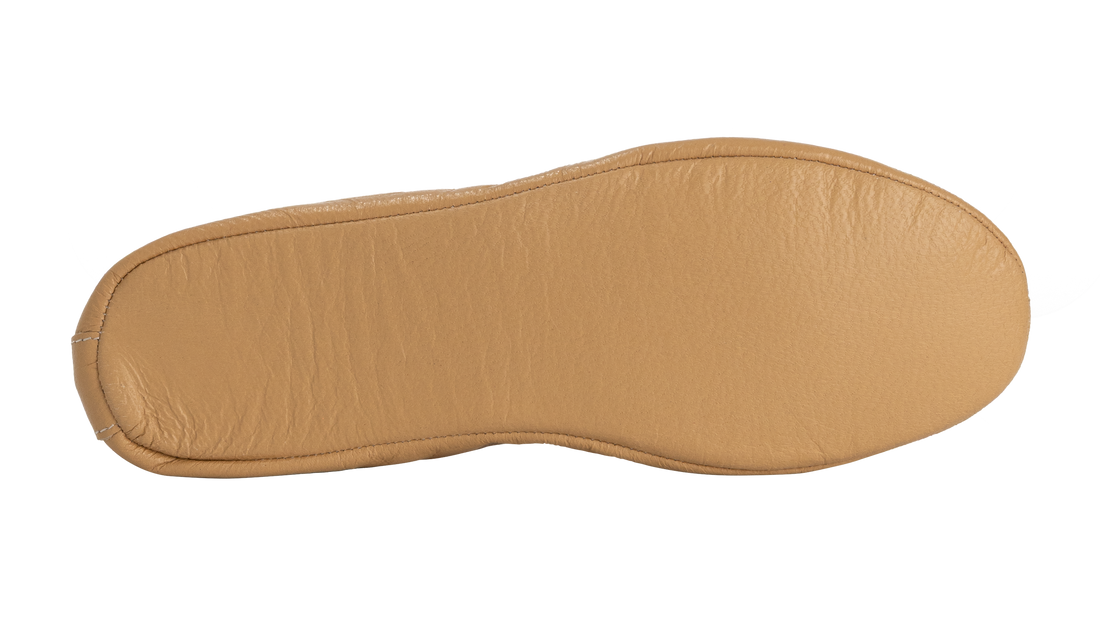
Minimalist or barefoot shoes share three core features: a wide, anatomically shaped toe box, a zero-drop sole (heel and forefoot at the same height), and a thin, flexible outsole. The goal is not to mimic being barefoot outdoors, but to let the foot function close to its natural range while still being protected. Our Sereen indoor leather shoes and Terra outdoor leather shoes are built around these principles.
Common foot complaints
Flat feet (pes planus)
Roughly 20 to 30 percent of adults have some form of flat feet. A distinction matters: flexible flat feet (the arch appears when you stand on tiptoe) generally respond well to strengthening. Rigid flat feet, caused by bony abnormalities, usually require medical assessment. Reviews published on PubMed suggest that strengthening the intrinsic foot muscles can reduce symptoms in flexible cases. See our deeper piece on flat feet and barefoot shoes.
Hallux valgus (bunions)
Hallux valgus is the progressive deviation of the big toe toward the other toes, often accompanied by a bony prominence. While genetics play a role, tight toe boxes are a well-documented contributor. Wider footwear will not reverse an established bunion, but it can reduce pressure and slow progression.
Plantar heel pain
Often called plantar fasciitis, this is inflammation or degeneration of the tissue running along the sole. Contributing factors include sudden training increases, tight calves, and weak intrinsic foot muscles. A stepwise approach to footwear change combined with targeted foot strengthening exercises is often part of conservative management.
How to begin
The transition to more natural footwear is a progressive load adjustment, not a wardrobe swap. A reasonable protocol:
- Weeks 1 to 2: 30 to 60 minutes per day of minimalist shoe wear, ideally indoors
- Weeks 3 to 4: extend to a few hours; add short walks outdoors
- Weeks 5 to 8: most daily activities; avoid long runs or hikes in minimalist shoes
- Week 8 plus: gradual integration into longer walks and, if desired, running
Fit is critical. A toe box that is too narrow defeats the purpose. Use our size guide and measure your foot while standing.
When to consult a specialist
Seek professional assessment if you experience persistent pain that worsens over two weeks, sudden swelling, numbness or tingling, pain that wakes you at night, or any symptom following a fall or injury. A podiatrist or foot physiotherapist can perform a gait analysis and rule out structural issues. We are a shoemaker, not a medical provider: our shoes do not treat, diagnose, or cure any condition.
FAQ
Are barefoot shoes suitable for everyone? Most healthy adults can transition safely with a gradual approach. Individuals with diabetes-related neuropathy, significant structural deformities, or recent surgery should consult their doctor first.
How long does transition take? Typically 6 to 12 weeks for basic comfort in daily life. Full adaptation (calves, Achilles, intrinsic muscles) can take 6 to 12 months.
Do I still need arch support? A healthy, strong foot is its own support. Arch support may be appropriate when prescribed for specific conditions, but it is not a universal requirement.
Can children wear barefoot shoes? Children's feet are still developing, and most podiatric guidance favours thin, flexible footwear that allows toes to spread. Browse our Earth Collection for kids' options.
This article is informational. For specific complaints, consult a podiatrist, foot physiotherapist, or physician.