
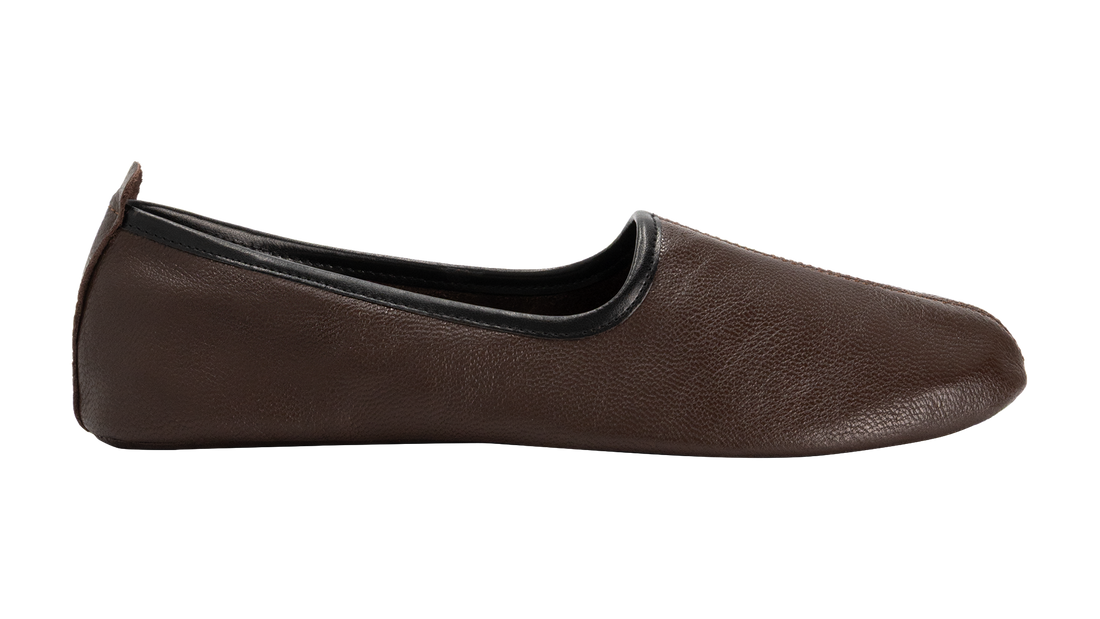
Flat feet: can barefoot shoes help?
This article is informational. For specific complaints, consult a podiatrist, foot physiotherapist, or physician.
Flat feet are one of the most common reasons people question whether barefoot shoes are for them. The short answer is: it depends on the type of flat feet you have, and on how you transition. Below is what current research and podiatric practice suggest.
What are flat feet?
Flat feet, or pes planus, describe a foot whose medial longitudinal arch is lower than average, so more of the sole touches the ground. Estimates from the American Podiatric Medical Association suggest that around 20 to 30 percent of adults have some degree of flat feet. For many, it causes no pain or limitation at all.
Flexible versus rigid
Clinicians distinguish two broad categories:
- Flexible flat feet: the arch disappears when standing but reappears when you rise onto your toes or sit. The joints and ligaments are intact; the problem is dynamic support.
- Rigid flat feet: the arch is absent in all positions, typically due to tarsal coalition or other bony conditions. This category usually requires medical evaluation and is often not suitable for unsupervised transitions to minimalist footwear.
A simple self-check: sit with bare feet, then stand; then rise on tiptoe. If a visible arch appears on tiptoe, the feet are likely flexible. This is not a diagnosis. If you are unsure or have pain, consult your doctor.
What the research says
Several studies indexed on PubMed have examined how minimalist footwear affects foot structure. A 2019 randomized trial reported in Scientific Reports found that wearing minimalist shoes for daily activities over six months significantly increased abductor hallucis and intrinsic foot muscle cross-sectional area compared with a control group. A separate review in the Journal of Foot and Ankle Research found similar effects and noted that stronger intrinsic muscles are associated with better arch support, particularly in flexible flat feet.
Crucially, no well-designed study has shown that barefoot shoes cure flat feet, and respectable research also documents injury risk when transitions are too fast. The goal is improved function, not structural transformation.
Why barefoot footwear may help (flexible flat feet)
- Wider toe boxes allow the forefoot to spread and load more evenly
- Flexible soles let the foot's small muscles engage rather than staying passive
- Zero-drop alignment reduces forward weight shift that overloads the arch
- Increased sensory feedback encourages better gait patterns
Our Sereen indoor leather shoes are a gentle entry point because indoor use allows slow loading. For outdoor wear, the Terra leather shoes give protection without adding artificial arch support.
How to transition safely
- Start indoors. 20 to 30 minutes per day for the first week. Look for calf tightness or arch fatigue; if present, reduce time.
- Add foot strengthening. Short-foot exercise, toe spreads, and calf raises, 5 to 10 minutes daily. See our foot exercises article.
- Lengthen sessions gradually. Increase wear by no more than 15 to 30 minutes per week.
- Keep conventional shoes for high-impact activities until your feet have adapted (6 to 12 weeks).
- Track symptoms. Mild muscle soreness is normal; sharp pain, swelling, or night pain is not.
Fit matters especially for flat feet: too narrow a toe box undoes the benefit. Check our size guide.
When barefoot is not the right choice
- Rigid flat feet diagnosed by a clinician
- Diabetes with neuropathy or circulation issues
- Recent foot or ankle surgery, until cleared
- Significant pain at rest or persistent night pain
- Active plantar fasciitis in an acute phase
In these cases, work with a podiatrist or podiatric physiotherapist. Custom orthotics may be part of your management and barefoot footwear may be reintroduced later, or not at all. For kids, see our broader Earth Collection and start with comfort over optimization.
For the wider picture, see our pillar guide on foot health and natural movement.
This article is informational. For specific complaints, consult a podiatrist, foot physiotherapist, or physician.